
 By Sebi Makis
Homemade soup is one of the most versatile and comforting culinary creations, serving as an excellent vehicle for seasonal produce, lean proteins, and nutrient-dense grains. Preparing a double or triple batch of soup to store in the freezer is a classic cornerstone of efficient meal planning. However, successfully preserving the flavor, texture, and structural integrity of soup requires a solid understanding of food science, thermal dynamics, and storage mechanics.
When liquid freezes, it expands, and the moisture within vegetables and grains forms ice crystals that can break down cellular structures. Without proper preparation, a beautifully textured chowder or hearty vegetable soup can transform into a separated, mushy, or watery disappointment upon thawing. By implementing systematic techniques during the cooking, cooling, packaging, and reheating phases, you can ensure that your preserved meals taste exactly as fresh as the day they were cooked.
Architectural Considerations During Cooking
The journey toward a perfectly thawed and reheated meal begins long before the soup enters the freezer. Certain ingredients react poorly to sub-zero temperatures, meaning you must modify your initial cooking strategy based on your long-term storage intentions.
Under-Cook the Vegetables
When vegetables are simmered in liquid, their cellular walls soften as starches gelatinize and pectin breaks down. Freezing exacerbates this process because the water inside the vegetable cells expands into jagged ice crystals, puncturing the cell walls.
-
The Al Dente Rule: If you plan to freeze a batch of soup, pull the pot off the heat when the root vegetables, celery, and carrots are still noticeably firm or al dente. They will continue to soften slightly during the cooling process and will soften further when subjected to the heat of the final thawing and reheating cycle.
-
Green Additions: Delicate greens such as spinach, kale, or Swiss chard turn into unappealing, slimy ribbons when frozen in liquid. Leave these out of the initial cooking process entirely. Instead, stir fresh greens directly into the hot, reheated soup right before serving, allowing the residual heat to wilt them perfectly.
Omit Dairy and Grains
Dairy products and starches are the two components most likely to ruin the consistency of a frozen soup.
-
The Danger of Separation: Heavy cream, milk, sour cream, and yogurt contain delicate emulsions of fat and water. When frozen, the fat molecules separate from the liquid, resulting in a curdled, grainy, or broken texture when the soup is warmed. Always omit the dairy during the initial cooking phase. Freeze a concentrated base, and stir in your cream or milk during the final minutes of the reheating process.
-
The Sponge Effect: Pasta, rice, quinoa, and barley continue to absorb liquid even after they are fully cooked. When stored in a liquid base in the freezer, they swell to maximum capacity, turning soft and gummy while simultaneously draining the soup of its delicious broth. The best approach is to cook your grains or pasta separately in a independent pot, drain them, and store them in a separate container, or simply boil a fresh batch to add to the thawed broth later.
The Critical Importance of Thermal Management
Placing a container of hot soup directly into the freezer is a serious food safety hazard and a recipe for structural degradation.
Overcoming the Danger Zone
According to standard food safety parameters, the temperature range between 40 and 140 degrees Fahrenheit is considered the danger zone, a window where foodborne bacteria can replicate rapidly.
-
Protecting Your Appliance: If you place a large container of hot soup into a closed freezer, the massive thermal mass will raise the ambient temperature inside the entire appliance. This spike can partially thaw adjacent frozen items, creating localized safety hazards.
-
The Ice Bath Technique: To cool your soup efficiently, fill a clean kitchen sink or a massive mixing bowl with cold water and ice cubes. Nestled the cooking pot containing the hot soup securely into the ice bath, stirring the liquid every few minutes. This process rapidly drops the temperature out of the danger zone within an hour, preserving the color of the vegetables and minimizing the time available for bacterial colonization.
Packaging Strategies and Container Selection
Choosing the correct storage medium determines how well your food resists freezer burn and how easy it is to manage when you are ready to eat.
Managing Liquid Expansion
Water expands by approximately nine percent when transitioning from a liquid to a solid state. Failure to accommodate this structural reality will result in shattered glass jars or popped plastic lids.
-
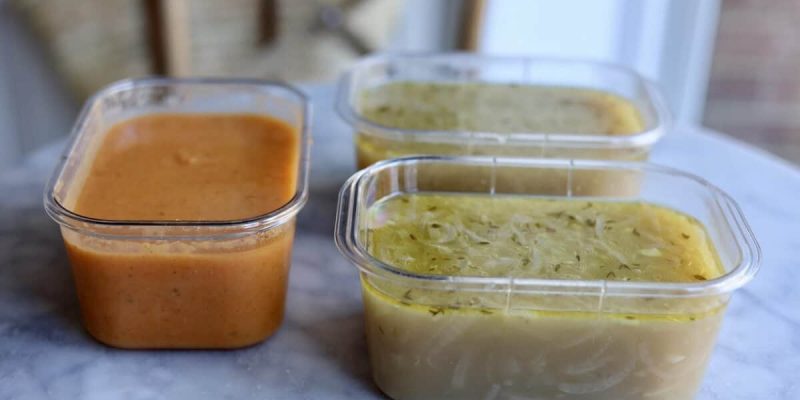
Headspace Allocation: When filling plastic containers or heavy-duty glass jars, always leave at least one full inch of empty space between the surface of the liquid and the underside of the lid. This headspace acts as a safety buffer for the expanding ice mass.
-
The Freezer Bag Method: Heavy-duty, zip-top freezer bags are highly efficient for maximizing space. Fill the bags with cooled soup, carefully press out all the excess air to prevent freezer burn, and seal them completely. Lay the filled bags completely flat on a baking sheet and place the sheet in the freezer. Once the bags freeze solid into flat, uniform bricks, they can be stacked vertically or filed like records, maximizing every square inch of storage space.
-
Portion Control: Avoid freezing soup in massive multi-gallon batches unless you intend to feed a large crowd all at once. Freezing soup in individual twelve-ounce or twenty-four-ounce portions allows for rapid thawing and ensures you only defrost exactly what you need.
Systematic Reheating Techniques
Reheating is the final phase where you restore your meal to its peak sensory state. The primary goal is to bring the liquid up to a safe temperature uniformally without overcooking the solid ingredients.
Thawing Methods
-
The Refrigerator Method: The safest way to thaw soup is to transfer the container from the freezer to the refrigerator twenty-four to forty-eight hours before you plan to consume it. This slow, temperature-controlled environment prevents bacterial growth on the outer layers while the core remains frozen.
-
The Direct Heat Method: If you need to prepare the meal immediately, run warm water over the outside of the plastic container or freezer bag just long enough to loosen the frozen block. Pop the solid frozen block of soup directly into a large saucepan or stockpot, add a few tablespoons of water to prevent scorching, cover with a lid, and warm over medium-low heat.
Applying the Heat
-
Stovetop Management: Place the thawed or partially thawed soup into a pot and heat over medium heat, stirring frequently. Bring the liquid to a rolling boil, ensuring it reaches an internal temperature of at least 165 degrees Fahrenheit for food safety.
-
The Emulsion Rescue: If your soup contains pureed elements or potatoes that appear slightly separated or watery upon thawing, use a whisk or an immersion blender for thirty seconds once the liquid is hot. This mechanical action re-emulsifies the starches and fats, restoring a smooth texture.
-
Final Adjustments: Once the soup is boiling hot, reduce the heat to low. This is the moment to stir in your fresh cream, milk, pre-cooked pasta, or fresh spinach greens. Taste the broth before serving; freezing can dull the intensity of salt and spices, so you may need to add a fresh squeeze of lemon juice or a pinch of salt to wake the flavors up.
Frequently Asked Questions
Can you safely freeze soups that contain potatoes or other starchy root vegetables?
While you can technically freeze soups containing potatoes, the results can vary based on the potato variety and how it was processed. Large chunks of waxy or russet potatoes tend to become spongy, mealy, and watery when thawed because their high water content breaks down structural tissues. However, if the potatoes are completely pureed into a smooth, thick broth base before freezing, they hold up significantly better and can be easily whisked back into a smooth state upon reheating.
How long can homemade soup remain in the freezer before the quality degrades?
When stored in a high-quality airtight container at a constant temperature of zero degrees Fahrenheit or lower, homemade soup will remain safe to eat indefinitely. However, for optimal taste, texture, and flavor preservation, it is best to consume the soup within two to three months. Beyond this window, the risk of surface freezer burn and general flavor dissipation increases.
What causes freezer burn on the surface of frozen soup, and how can it be prevented?
Freezer burn occurs through sublimation, a process where ice crystals on the surface of the food evaporate directly into the dry air of the freezer environment. This leaves behind dehydrated, oxidized patches that taste stale or papery. To prevent this, ensure that the surface of the soup has minimal exposure to air. If using plastic containers, press a piece of plastic wrap directly onto the surface of the cooled liquid before snapping the lid into place.
Is it safe to thaw frozen soup on the kitchen counter at room temperature?
No, thawing soup on the kitchen counter is unsafe. The outer edges of the frozen block will thaw quickly and reach room temperature, entering the bacterial danger zone long before the solid icy core has melted. This provides a fertile window for dangerous bacteria to multiply on the outer layers, rendering the entire batch unsafe even if you boil it later.
Why do clear broths sometimes look cloudy after being frozen and thawed?
Cloudiness in thawed clear broths is usually caused by the precipitation of microscopic protein structures and rendering particles that clump together during the slow freezing process. This change is purely aesthetic and does not affect the safety or flavor of the meal. You can easily clarify the broth by bringing it to a gentle simmer and straining it through a fine-mesh sieve or a piece of cheesecloth.
Can I safely refreeze a portion of soup that has already been thawed once?
You can safely refreeze soup only if it was thawed entirely within the refrigerator and kept under 40 degrees Fahrenheit the entire time. However, be aware that the repeated cycle of freezing, thawing, and refreezing will cause a significant drop in quality, turning the vegetables mushy and degrading the vibrant flavor profile. If the soup was thawed in the microwave or using warm water, it must be consumed immediately and cannot be refrozen.
How do I prevent a thick bean or lentil soup from burning on the bottom of the pot when reheating?
Thick, legume-based soups are highly viscous and settle to the bottom of the cooking vessel, where they can quickly scorch over direct flame. To prevent this, add two to three tablespoons of water, vegetable broth, or bone broth to the bottom of the pan before adding the frozen or thawed soup block. Heat the pot over low heat, keep it covered to trap steam, and stir the mixture constantly with a flat-edged wooden spoon to keep the solids moving until the mass liquifies.