
 By Sebi Makis
Why Painting Matters More in Hospitality Than You Think
Walk into any hotel lobby and you can usually tell within seconds whether the space feels inviting. It is not always the furniture or the lighting that makes the first impression. More often, it is the condition of the walls, the ceilings, and the subtle details that tie everything together. Paint plays a quiet but powerful role in shaping how guests perceive a space.
In hospitality, appearance is directly tied to reputation. Guests expect cleanliness, consistency, and comfort from the moment they arrive. Worn surfaces, faded colors, or visible repairs can signal neglect, even if everything else is in place. This is why many properties invest in regular repainting as part of their overall maintenance strategy.
The connection between aesthetics and guest experience
Color and finish choices influence how a space feels. Soft tones can create a sense of calm in guest rooms, while bold accents might energize a lobby or dining area. These decisions are not random, they are carefully planned to match the brand and the atmosphere a hotel wants to create.
Guests may not consciously notice the paint, but they definitely feel its impact. A clean, well-painted room feels fresh and cared for. That subtle impression can affect reviews, repeat bookings, and overall satisfaction in ways that go beyond simple aesthetics.
Maintaining brand consistency across spaces
Hotels often rely on a consistent visual identity. From one location to another, guests expect a familiar look and feel. Paint colors, finishes, and application quality all contribute to that consistency.
Commercial painting contractors help maintain this standard across large properties. They follow detailed specifications to ensure that every hallway, guest room, and common area aligns with the brand’s design guidelines. This attention to detail keeps the experience cohesive for guests.
What Sets Hotel Painting Apart From Other Commercial Projects
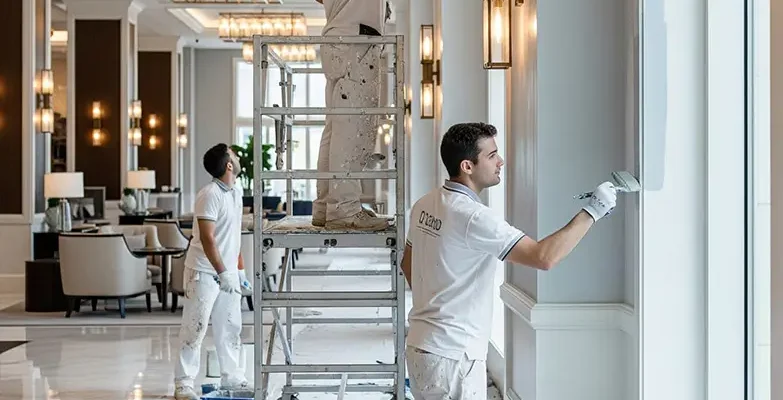
Painting a hotel is very different from painting an office or a retail space. The scale is larger, the expectations are higher, and the timeline is often more complex. Hotels operate around the clock, which means painting projects must be carefully planned to avoid disrupting guests.
This type of work requires a specific approach. Contractors need to balance efficiency with precision, working quickly while still delivering a high-quality finish. It is a challenge that requires both experience and coordination.
Working around guests and daily operations
Unlike many commercial properties, hotels rarely close for renovations. Guests continue to check in and out, staff move through the space, and services run as usual. Painting crews must adapt to this environment.
This often means working in phases or during off-peak hours. Sections of the hotel may be completed one at a time to minimize disruption. Clear communication between the contractor and hotel management is essential to keep everything running smoothly.
Handling high-traffic areas and wear
Hotel spaces experience constant use. Hallways, lobbies, and elevators see heavy foot traffic every day. This leads to scuffs, scratches, and general wear that can quickly affect the appearance of surfaces.
Painters use durable materials and techniques designed for these conditions. Specialized coatings and finishes can help surfaces resist damage and stay looking fresh longer. This reduces the frequency of repainting and helps maintain a polished look.
The Process Behind a Successful Hotel Painting Project
A well-executed painting project does not start with a brush. It begins with planning, preparation, and a clear understanding of the property’s needs. Each step builds on the last, creating a process that leads to consistent results.
From the initial assessment to the final walkthrough, every phase plays a role in the outcome. Skipping or rushing any part of the process can affect both appearance and durability.
Planning and scheduling for minimal disruption
Planning is one of the most important stages. Contractors work with hotel management to create a schedule that fits around occupancy levels and peak periods. This helps reduce inconvenience for guests and staff.
Detailed timelines outline which areas will be painted and when. This structured approach allows the project to move forward without unexpected delays. It also ensures that resources are used efficiently.
Surface preparation and quality application
Preparation is where much of the real work happens. Surfaces must be cleaned, repaired, and primed before any paint is applied. This step ensures that the final finish adheres properly and lasts longer.
Once preparation is complete, the painting process begins. Skilled crews apply coatings evenly and consistently, paying attention to edges, corners, and transitions. The goal is a smooth, professional result that enhances the overall space.
Choosing the Right Materials and Finishes
Not all paint is created equal, especially in a commercial setting. Hotels require materials that can handle frequent use while maintaining their appearance. This makes product selection a key part of any project.
Contractors consider factors such as durability, ease of cleaning, and environmental impact when choosing materials. The right combination of products can make a noticeable difference over time.
Durability and maintenance considerations
Durable finishes are essential in high-traffic areas. These coatings resist scuffs and stains, making them easier to maintain. This is particularly important in spaces that are used continuously.
Maintenance teams benefit from surfaces that can be cleaned without damaging the finish. This extends the life of the paint and reduces the need for frequent touch-ups. Over time, this can lead to cost savings for the property.
Eco-friendly and low-odor solutions
Many hotels prioritize guest comfort during renovations. Low-odor and low-emission paints help maintain indoor air quality during and after the project. This is especially important in occupied spaces.
Eco-friendly options also align with broader sustainability goals. Using these materials can support a hotel’s commitment to environmental responsibility. It is a practical choice that benefits both guests and the property.
How a Hotel Painting Company Adds Value
Working with a specialized hotel painting company brings a level of expertise that general contractors may not offer. These professionals understand the unique demands of hospitality environments. Their experience allows them to anticipate challenges and deliver consistent results.
Value comes not just from the final appearance, but from the efficiency and reliability of the process. A well-managed project minimizes downtime and ensures that the property remains operational.
Expertise in large-scale coordination
Hotels often require painting across multiple floors and areas. Coordinating this work requires careful planning and communication. Experienced contractors know how to manage teams and schedules effectively.
They also understand how to adapt to changing conditions. If occupancy levels shift or priorities change, they can adjust the plan without compromising quality. This flexibility is essential in a dynamic environment.
Long-term benefits for property owners
Investing in professional painting services has long-term advantages. High-quality work lasts longer, reducing the need for frequent repainting. This helps control maintenance costs over time.
A well-maintained appearance also supports the property’s reputation. Guests are more likely to return to a space that feels clean and cared for. In this way, painting becomes part of a larger strategy for success.
Trends Shaping Modern Hotel Interiors
Hotel design continues to evolve, and paint plays a role in these changes. New trends reflect shifts in guest preferences and broader design movements. Staying current helps properties remain competitive.
These trends influence color choices, finishes, and overall design approaches. They also create opportunities for creative expression within commercial spaces.
Neutral palettes with bold accents
Many hotels are moving toward neutral base colors paired with bold accent features. This approach creates a calm foundation while adding visual interest. It allows designers to refresh spaces without major structural changes.
Accent walls, artistic finishes, and textured coatings can add depth and character. These elements help create memorable environments that stand out to guests.
Blending functionality with design
Modern hotel interiors balance aesthetics with practicality. Surfaces must look good while also handling daily use. This has led to the development of finishes that combine durability with visual appeal.
For example, washable matte finishes offer a soft look while still being easy to maintain. This blend of function and design reflects the evolving needs of the hospitality industry.
Keeping Spaces Fresh Without Major Renovations
Not every update requires a full renovation. Painting offers a cost-effective way to refresh a space and improve its appearance. With the right approach, it can transform a property without major disruption.
Regular updates help prevent spaces from feeling outdated. They also allow hotels to respond to changing trends and guest expectations.
Strategic updates that make a difference
Small changes can have a big impact. Repainting high-visibility areas such as lobbies and corridors can instantly improve the look of a property. These updates are often completed quickly, making them a practical choice.
Strategic use of color can also redefine a space. A new palette can shift the mood and create a fresh experience for returning guests. This keeps the environment feeling current and inviting.
Extending the life of existing interiors
Painting helps protect surfaces from wear and damage. This extends the life of walls, trim, and other elements. It also reduces the need for more extensive repairs in the future.
By maintaining surfaces regularly, hotels can avoid larger renovation costs. This proactive approach supports both appearance and long-term planning.
Final Thoughts on Craftsmanship and Guest Experience
Hotel painting is more than a maintenance task. It is a key part of how a property presents itself to the world. From first impressions to long-term durability, every detail contributes to the guest experience.
Behind each well-painted space is a combination of planning, skill, and attention to detail. When done right, it creates an environment that feels welcoming, consistent, and thoughtfully maintained. For guests, that translates into comfort. For property owners, it supports reputation and success.